
.png)




Lives Not Stock
Animal Farming Strategy and Live Animal Exports
.webp)
The European Commission’s recent consultation on a new animal farming strategy closed last month. While the formal window for submissions has ended, the debate it exposed is far from over.
At its core, this is not just an agricultural policy discussion. It is a question of how a system treats living beings, and whether economic structures can continue to uphold practices and livelihoods that are fundamentally incompatible with giving animals a good life. The Commission’s initiative, expected to culminate in a formal strategy in 2026, sits at the intersection of competing pressures.
Factory Farms Are on the Rise
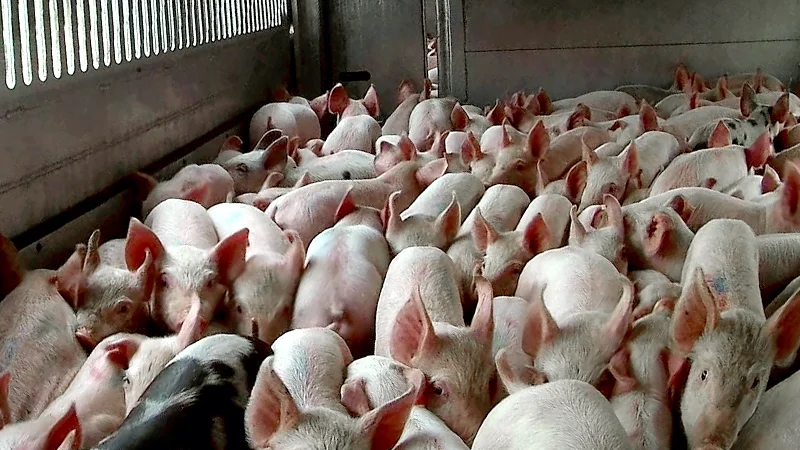
While lives are seen as stock, economic viability will continue to shape the domination and commodification of animals. Why else would factory farming be expanding in the UK? Farmers and industry representatives argue that higher animal welfare and environmental standards increase operational costs. Imports produced under lower standards remain competitive in the market and create financial competition. Many farmers risk collapsing businesses, and are increasingly turning towards factory farming models.
Some farmers and consumers support higher welfare in principle, but claim it's impossible without fairer pricing, better supply chain transparency, and import rules that don’t allow lower-welfare animal products from abroad into the UK. The moral distress many farmers experience in sending animals to slaughter is compounded by broader pressures such as debt, isolation, and precarious working conditions. Within this system, farmers are constrained and often stuck, and animals are continuing to be exploited on an increasing scale.
The Issue with Transport
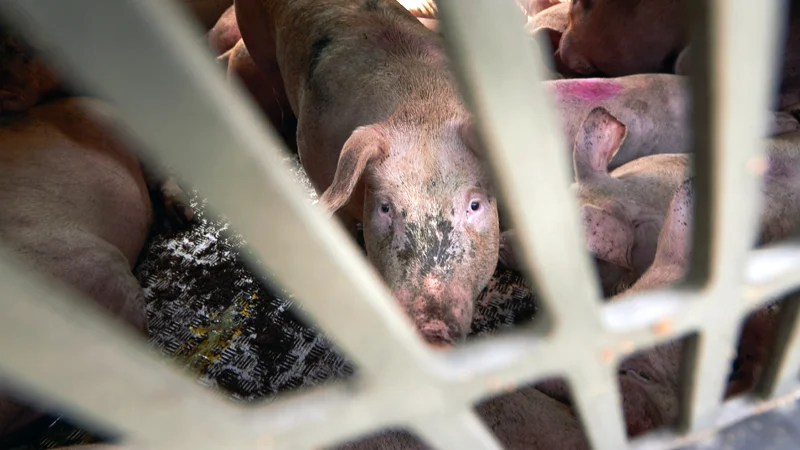
Transport often slips under the radar. While many farmers claim to be concerned about welfare, not many are aware that long-distance journeys are one of the most stressful stages in an animal’s life, because they are not involved in it. These journeys often mean heat stress, hunger, dehydration, overcrowding, and the strain of unfamiliar, unstable conditions. They’re often a result of wider system changes, like fewer local abattoirs and more specialised farming, which force animals to travel further between farms or to slaughter. Transport also increases the risk of disease spread.
This is where the issue becomes harder to ignore. Transport isn’t just a logistical step in the system; it’s one of the points where animals are most vulnerable and commodified. And it’s happening every day, largely out of sight. Animals pass unnoticed on shipping routes, motorways, embedded in supply chains, and ultimately stripped of their life and uniqueness in the slaughterhouse, ending up on someone's plate. The distance between perception and reality is profound and rarely interrogated.
Ireland: A Case Study in Structural Tension
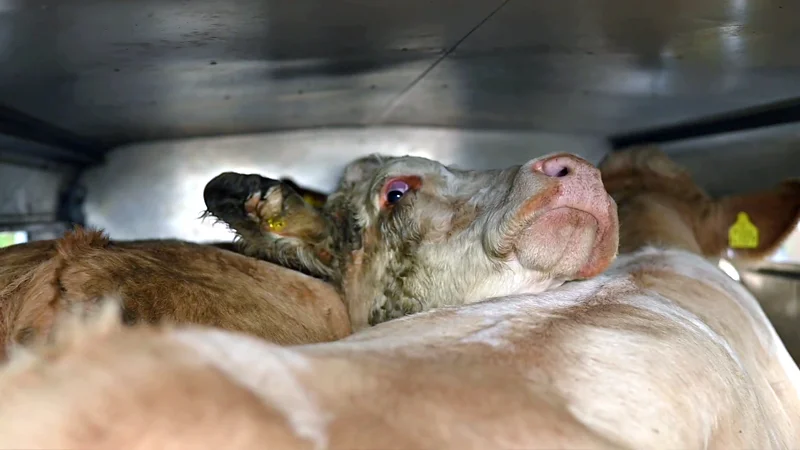
The situation in Ireland illustrates how proposed EU reforms are colliding with national economic models. New rules under discussion (particularly around reduced journey times, stricter vehicle specifications, and reduced capacity for animals) could significantly restrict Ireland’s ability to participate in live animal exports. As an island nation, Ireland relies heavily on transport routes that are longer and more complex than those within mainland Europe.
Industry representatives argue that these changes could “effectively end” the live export trade, which raises a critical question: if a system can only function under conditions that severely compromise animal lives and wellbeing, how can we continue to justify its existence? And would consumers still buy these products if they knew their true cost?
A notable feature of the Irish debate, according to Lorcan O’Dochartaigh, livestock trade representative for the Irish Livestock Exporters Association, is the claim that NGOs and activist groups are spreading “disinformation” about live exports. This deserves scrutiny. What is being labelled as disinformation often consists of documented transport conditions: footage, inspections, and investigative reports that reveal systemic issues. While narratives can be shaped selectively on all sides, dismissing these accounts outright avoids engaging with the evidence of live transport footage. The more productive question is not whether criticism exists, but whether the conditions being documented are acceptable under the EU’s own stated principle that animals are sentient beings.
What Comes Next
Although the consultation phase has ended, its influence continues. The Commission will use this input to shape legislative proposals, meaning the current moment is one of negotiation rather than conclusion.
For campaigns like Lives Not Stock, our task is not simply to participate in consultations, but to keep the lived reality of animals visible through the power of undercover investigations within a policy process that doesn’t give their lives the respect they deserve.
As always,
For the Animals!
.png)


The 'Kept Animals Bill' must be amended to be inclusive to all species for all purposes

The public saw ads across six cities with messaging on the plight of animals in transport.

Our 'pig protestors' were out in force in London demanding an end to live animal exports.
more POSTS
more Press releases




.png)