
.png)




Expired
57% of cafés open to default oat

- Blog written by Eve Marshall, Corporate Research and Outreach Officer at Animal Justice Project
Between January and April, Animal Justice Project surveyed 50 independent UK cafés on transitioning to oat milk as the default option instead of dairy. While this was a relatively small sample and not intended to represent every café across the UK, it offers an informative snapshot of attitudes. We found a clear shift in openness once the idea was properly considered.
Before starting the survey, 84% of cafés said they had never considered trialling default oat milk. However, by the end of the survey, attitudes had shifted: 57% said they would either consider it or were open to the idea, compared to only 43% who remained opposed. This suggests that awareness and framing play a significant role in conversations around plant-based transitions.
Concerns about switching were consistent

The most common were the risk of negative customer reactions (71%) and the higher cost compared to cow’s milk (68%). Less prominent but still notable were concerns around unfamiliar taste (23%), allergens (21%), and a desire to support local farmers (20.5%). These responses point to a mix of financial risk perception, uncertainty about customer acceptance, and loyalty to tradition rather than outright rejection of plant-based options.
On the other hand, cafés were clear about what could inspire them to shift towards default oat milk. The strongest driver was evidence of customer demand (69%), followed by lower wholesale prices (52%). A smaller but meaningful group pointed to the importance of positive media exposure (26%), peer learning from other cafés (21.4%), and access to clear, credible information, particularly around health, animal ethics and sustainability.
Cafés favoured low-risk gradual approaches
Nearly half (48%) suggested starting with default oat milk in specialty or signature drinks rather than across the entire menu. Others highlighted the value of clear signage (41%), friendly staff recommendations (36%), and customer reassurance mechanisms like refunds or free swaps (33%). This suggests that trust, relationships, and customer experience may matter more than cost and discounts alone.
The benefits cafés would like to see as a result of the change were increased revenue (45%), reduced environmental impact (43%), and improved customer experience (38%). This points to the cafés awareness of the lower environmental impact and growing popularity of oat milk. However, a notable proportion expressed scepticism, with some expecting no benefits at all and raising concerns about potential revenue loss, reduced customer choice, and impacts on dairy farmers.
This tension reinforces that the transition is not just operational but values-driven. And this is why we emphasise choice at the till during our trials, with staff asking customers, “is oat milk okay?” Thanks to Minor Figures, we also provide stickers and signage for cafés to enhance customer awareness and offer a regenerative oat milk option, helping to ensure the oats genuinely deliver positive outcomes for both nature and support the farmers committed to such systems.
Oat milk is the new normal
When presented with a practical support package (including funding, logistics, media exposure, and most importantly, free oat milk) interest increased. 19% said they would definitely try default oat milk, and an additional 38% said “maybe,” with less than half (43%) opposed. The large “maybe” group is particularly important: it represents cafés that are persuadable with the right conditions, support, and evidence.
Taken together, these findings suggest that the main barriers to default oat milk aren’t rigid opposition but perceived financial risk, community concern, and a lack of clear information. That’s why we’re supporting cafés to trial default oat milk by providing 60 litres of free oat milk courtesy of Minor Figures, posters and stickers, and a practical guide for café staff and baristas that addresses the key concerns and motivations highlighted in this research.
If you are a café interested in getting involved, or know a café that might be, you can reach out to us at eve@animaljusticeproject.com for more information and resources.
As always,
For the Animals!
.png)


Mother cows were kicked just moments after giving birth, and their newborn calves were subjected to the same heartless cruelty.
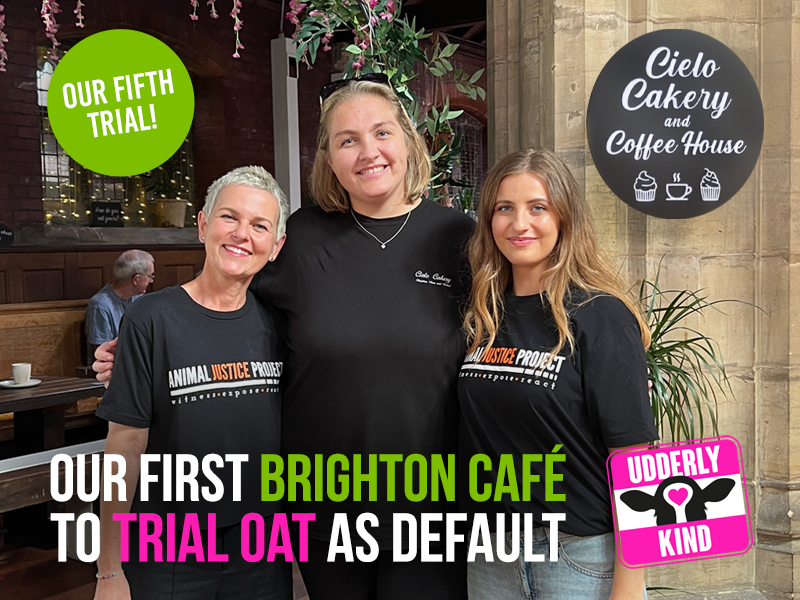
Cielo Cakery in Brighton has just joined our Udderly Kind campaign.

If Run For All were to drop Arla, it would deal a significant reputational blow.
more POSTS
more Press releases




.png)