
.png)




Expired
Banning ‘Milk’ but Preserving Exploitation
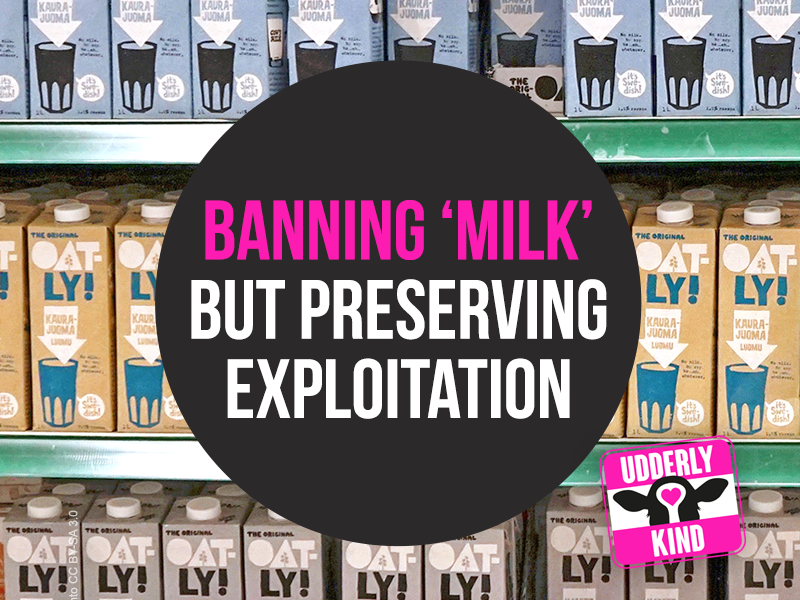
After a lengthy legal battle with the UK dairy Industry, the UK Supreme Court decided that Oatly cannot trademark or use the word “milk” in ways associated with marketing including the phrase “post milk generation”. The decision is being framed as a victory for clarity and consumer protection. But beneath the legal language lies a much bigger story about power, competition and exploitation.
This Was Never About Consumer Confusion
Let’s address the central claim that banning plant-based companies from using the word “milk” protects shoppers from being misled. Consumers are not confused about where oat milk comes from. The term “milk” has long been used in everyday language to describe plant-based beverages, from coconut milk to soy milk. This case was not about bewildered members of the public accidentally buying oats in place of dairy. It was about drawing a legal line that protects the traditional dairy sector from growing competition.
Oatly has described the ruling as anti-competitive, and it is hard to ignore the imbalance. Animal agriculture benefits from decades of subsidies, regulatory backing and cultural entrenchment.. Yet the rapid growth of plant-based products shows that consumers are already questioning it. Cafés across the UK routinely offer oat milk as standard with more considering making the switch. Supermarket shelves also reflect a clear shift in demand. The legal battle over terminology highlights just how significant that shift has become, how normalised plant milks now are, and how afraid the dairy industry is.
What the Dairy Industry Is Really Defending
Dairy production depends on repeated impregnation of cows in order to induce lactation. Calves are separated from their mothers within hours or days of birth, even on RSPCA Assured or organic farms. Male calves are shot, sent to the slaughterhouse or sold into the veal or beef industries, while females are raised to repeat the same cycle. Mother cows are slaughtered when their milk production declines. This is the reality behind the word “milk” as defined in law.
You can remove the word from a carton of oats, but you cannot remove the suffering from dairy production. Protecting terminology does nothing to address the ethical cost embedded within the system itself.
You Cannot Ban a Movement
This ruling may protect a word, but it cannot stop progress. You can call it “oat drink.” You can restrict slogans. You can litigate over trademarks in the Supreme Court of the United Kingdom. But you cannot silence the growing awareness of how dairy production affects animals, the climate and public health.
You cannot legislate away ethical concerns. You cannot trademark compassion. You can take the word “milk.” But you cannot take the exploitation out of dairy, and you cannot stop people from choosing something better. Change is coming.
As always,
For the Animals!
.png)


We bring you our BREAKING INVESTIGATION into the UK calf trade.
Learn More
Starbucks has the power to set a new standard and spark change across the entire food and beverage industry.

The Buitelaar Group has been exposed for the first time as part of Animal Justice Project’s EXPIRED campaign.
Learn Moremore POSTS
more Press releases




.png)