
.png)




Expired
Oat Milk Doesn’t Have to be More Expensive
.webp)
Oat milk generally costs more for small business owners to purchase, and therefore for the customer to buy. But how can this be countered? There are creative and effective ways cafés can balance the cost of offering oat milk as default without compromising on profits or customer experience. In fact, some of the most progressive cafés have already implemented these steps.
1. Levying a small fee on disposable cups: King’s College London introduced a 30p charge on single-use coffee cups, and the revenue generated funds the provision of oat milk at no extra cost. This approach not only incentivises sustainable habits (bringing your own cup) but also offsets the higher cost of plant-based milk. It's a win for the planet, and a win for dairy-free options.
2. Adjusting base pricing slightly across the board: Rather than charging extra for oat milk, some cafés subtly adjust the pricing of all milk-based drinks by just 5-10p. This tiny change is barely noticed by consumers but helps absorb the cost difference of offering oat milk as default, increasing access to sustainable, cruelty-free choices without pointing fingers. Flat pricing keeps it fair and does not alienate those wishing to make ethical choices.
3. Partnering with plant-based brands: Some cafés collaborate with oat milk brands like Minor Figures, Oatly, or MOMA for discounted rates or co-marketing support. This can come in the form of free samples, branded cups, or subsidised supply during a pilot period. This could help you test out the oat milk default model with lower risk. A novel idea is to become a brand ambassador for a particular type of oat milk, leveraging support and exposure for your business.
.webp)
4. Encouraging loyalty with a ‘plant-based only perks’ scheme: By offering rewards (such as a free drink after 10 purchases) for customers who choose oat or plant milks, cafés can encourage repeat business while offsetting costs through increased volume and loyalty. It’s really important not to punish people with surcharges for making better choices. Instead, reward them for ordering oat milk and they will keep coming back for more.
5. Cutting dairy wastage: Switching to oat milk as default can significantly reduce wastage. Oat milk has a longer shelf life than dairy once opened, doesn’t curdle as easily, and can be stored ambient until use which can mean lower spoilage costs over time. How often have you opened a bottle of cow’s milk that has gone bad? You won’t have that problem with oat milk.
6. Educating customers: Being transparent about why oat milk costs more financially, and why the café is choosing to promote it anyway, builds trust. Customers increasingly want to support ethical and environmentally responsible businesses, and many are willing to go out of their way to do so.
Oat Milk is the Future
.webp)
The Vegan Society highlights a growing trend in plant-based diets, especially among Gen Z, who overwhelmingly choose plant-based milks. 10% of the UK population are reducing or eliminating animal products in some way, and this will only continue to increase.
Moreover, YouGov polling commissioned by Animal Justice Project, evidenced that almost one-third of UK consumers would accept oat milk as the default option. Among Gen Z plant-based preferences are even more pronounced at 44%. And this isn’t even counting those who already follow a vegan lifestyle, just those open to change and having oat as the default!
Research from Faunalytics shows that plant-based default programs can increase the selection of plant-based options from 17.2% to a much higher percentage of 72.5%. Oat as the default in any café will, naturally, increase the sales of it. So if you’re committed to the future of all life on our planet, then you can make oat work as the default in your business.
As always,
For the animals!
.png)


We bring you our BREAKING INVESTIGATION into the UK calf trade.
Learn More.webp)
It’s time for change! No female should endure this regardless of species.
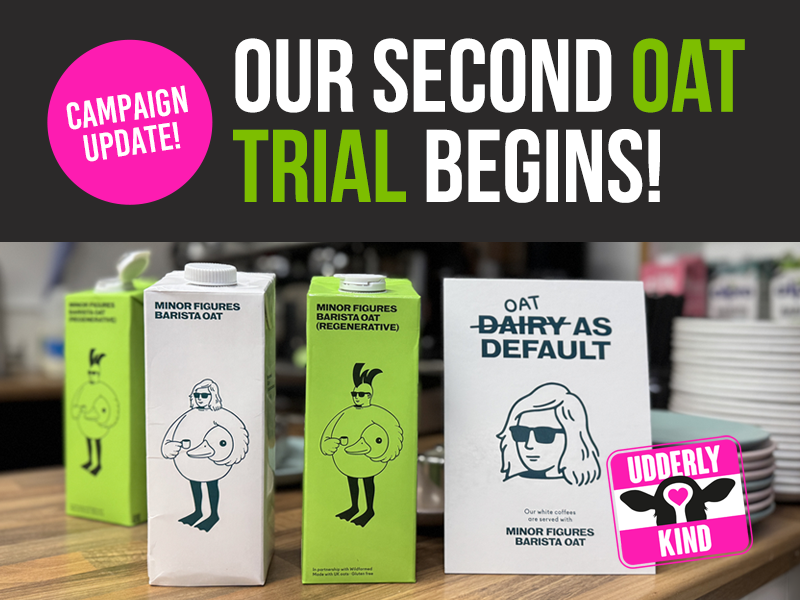
An Essex café has become one of the first in the UK to trial oat milk as the default.
more POSTS
more Press releases




.png)