Respect All Life
Consultation on pig gassing announced
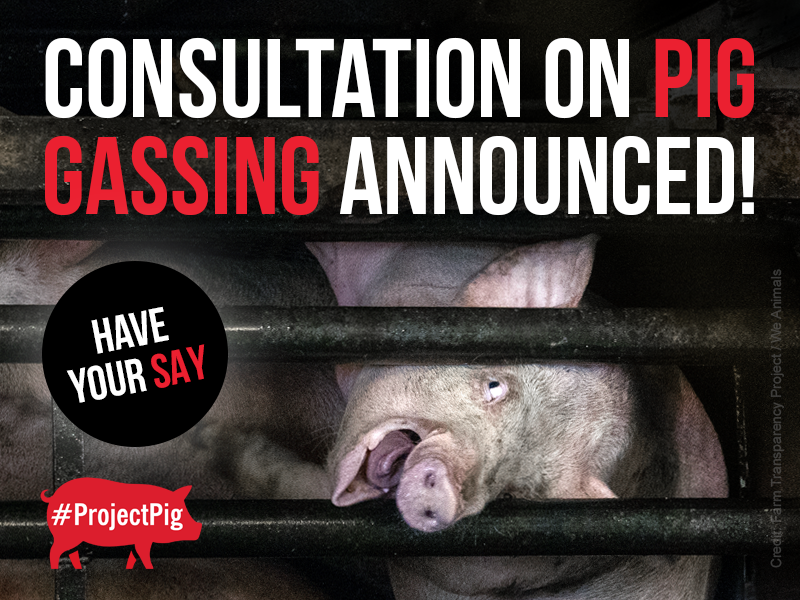
The pig gassing consultation is here, but here's why changing the gas isn't enough.
This week the UK Government opened its long-awaited consultation on phasing out carbon dioxide (CO₂) stunning of pigs. Around 9 million pigs are killed using CO₂ in UK slaughterhouses every year – roughly nine in every ten pigs slaughtered – and the Government now states plainly that the evidence CO₂ causes them significant pain, suffering and distress is well known.
We welcome this news. Government advisers first called for aversive gas systems to be phased out back in 2003, and in the two decades since, the use of CO₂ has grown rather than shrunk – from around half of all pigs in 2013 to 90% today. Ministers promised this consultation in the Animal Welfare Strategy last December, and after years of warnings from scientists, vets and campaigners, it is finally here.
But it doesn’t go far enough. The Government isn’t proposing to close the gas chambers – it’s proposing to change the gas inside them. If CO₂ is unacceptable, so is every gas used to suffocate pigs. Different gas, same chamber. Now is the moment to say so clearly, and to call on the Government to Turn Off The Gas completely.
What the Government is proposing
The consultation, run by Defra on behalf of all four UK nations, proposes banning the use of CO₂ to stun and kill pigs in slaughterhouses and knacker’s yards. Its preferred option is a three-year transition period before a ban comes into force, and it is also asking whether two years would be feasible. By the Government’s own estimate, every extra year of transition means around another 10 million pigs gassed with CO₂.
What the consultation doesn’t propose is an end to gas chambers themselves. Its impact assessment assumes slaughterhouses will switch to argon, an inert gas, because it costs less than the other options and lets them keep using the gondolas they already have. Pigs would still be loaded into metal cages, lowered into a chamber and killed with gas – just a different one.
Have your say before 21 December
The Government is asking the public for their views, and anyone can respond. The consultation is open until 21 Dec 2026, and you can submit your views. Responses that arrive after the deadline won’t be counted.
You don’t need to be an expert, and you won’t have to answer every question. Many sections are written for slaughterhouses, retailers and gas suppliers, and the online form skips them if they don’t apply to you. The general questions near the start, and the space for further comments at the end, are where your voice counts most.
It is vital that you write in your own words. Defra has said that responses using identical campaign wording may be grouped and analysed separately, so putting things your own way helps your response stand on its own. Here are six points to think about as you write yours.
Six points to think about
1/ Ending CO₂ gassing is overdue, but it shouldn’t be the end point. The Government accepts that CO₂ causes pigs significant pain, suffering and distress, and admits that voluntary efforts to move away from it have failed for twenty years. Banning it is the right first step. But replacing one gas with another leaves the gas chamber standing, and the real question is whether pigs should be put into gas chambers at all.
2/ The plan keeps the same chambers. Defra’s own analysis assumes slaughterhouses will choose argon partly because it lets them carry on using their existing gas pits. Its modelling also assumes six slaughterhouses would build a second gas chamber, because argon takes longer to work than CO₂. This isn’t the end of gas chambers – in some places, it means more of them.
3/ Argon still suffocates pigs. Argon works by pushing the oxygen out of the chamber until pigs collapse and die from lack of oxygen. The consultation itself acknowledges that this takes longer than with CO₂, and that pigs must be kept in the gas for longer so they don’t regain consciousness. Argon may cause less of the acidic pain associated with CO₂, but less distressing is not the same as 'humane' – conscious pigs are still lowered into a chamber and suffocated until they never wake up again.
4/ Most people don’t know this is happening. Animal Justice Project-commissioned YouGov polling in May 2026 found that only 12% of the UK public correctly identify CO₂ as the most commonly used method of stunning pigs before slaughter, while opposition to phasing out CO₂ gas slaughter is extremely low, at just 2%. A decision about the future of gas chambers shouldn’t be made while most people don’t know they exist. The public deserves an honest account of what any ‘alternative’ still involves.
5/ Protecting slaughter numbers shouldn’t be the goal. One of the Government’s stated aims for this policy is maintaining the capacity of the pig slaughter industry. Its modelling projects capacity of around 10.6 million pigs a year once slaughterhouses convert to argon – more than the 9.7 million currently killed with CO₂. A ‘welfare’ policy shouldn’t be built around protecting the number of animals killed and propping up such a violent industry. No method of slaughter is humane, and the long-term answer is a food system that doesn’t depend on killing pigs.
6/ Help pig farmers leave a failing industry. Pig farming is in financial trouble. The big slaughter companies have cut the number of pigs they contract from independent farmers, Scotland has launched a £2m support fund after an estimated 15% of breeding sows in its independent sector were lost in the first months of 2026, and the industry has been pressing Defra for a support package of its own. Rather than propping up a struggling system, the Government should create a dedicated fund to help pig farmers leave the industry and move into viable plant-based farming or other secure work. The consultation asks about the impact on producers, and this is the place to say it.
Turn off the gas
For more than twenty years, the debate about pig slaughter has been about which gas to use. This consultation is a chance to change the question. Please respond before 21 December, and share this blog with friends and family so they can add their voices too.
You can respond here and find out more about our campaign at TurnOffTheGas.org.
If what you’ve read here has stayed with you, the most powerful thing you can do today is leave pigs off your plate and choose plant-based food. Different gas, same chamber – it’s time to Turn Off The Gas.
As always,
For the animals.


Somerby Top farm – where pigs were eaten alive.

Today we launched our petition demanding that the RSPCA drop RSPCA Assured and advocate for plant-based food instead.

We took our ‘Goats to Oats’ outreach event to Leeds and what a fantastic day it was!
more POSTS
more Press releases